The Question Almost Everyone Asks
One of the most common questions people ask when they first become interested in radio is deceptively simple:
"What radio should I buy?"
Sometimes the question is framed differently.
- "What is the cheapest way to get started?"
- "What's the best beginner radio?"
- "What gear do I need?"
The question makes sense because the radio world can feel overwhelming to someone standing at the edge of it for the first time. There are countless manufacturers, dozens of radio services, endless product reviews, and no shortage of opinions.
If you spend enough time on YouTube, online forums, or social media groups, you'll quickly discover that everyone seems to have a recommendation. Some are thoughtful and grounded in experience, and others are little more than personal preference presented as objective truth. And sorting through the difference can be difficult when you're new.
The challenge is that many newcomers approach radio as a purchasing problem, when it is actually a learning problem.
They assume that capability comes from buying the right equipment. In reality, capability comes from understanding how communications systems work, how radios fit into those systems, and how to operate them effectively.
Equipment matters, and no serious operator would argue otherwise. However, equipment is only one piece of a much larger picture.
The goal is not to buy the perfect radio. The goal is to begin building communication capability. That distinction may seem subtle at first, but it changes how you approach every decision that follows.
The Trap of Buying Before Understanding
Modern consumers are conditioned to believe that most problems can be solved through a purchase.
- Need better photographs? Buy a better camera.
- Need to get into shape? Buy better equipment.
- Need better communications? Buy a better radio.
The problem is that equipment can only solve certain types of problems.
A radio cannot compensate for a lack of planning, and it cannot teach operating discipline. It cannot replace practice, or automatically overcome poor antenna placement, weak communications plans, or unrealistic expectations. Yet many beginners find themselves trying to solve knowledge gaps with purchasing decisions.
The radio market encourages this behavior. For example, manufacturers advertise features; reviewers compare specifications, and online discussions often revolve around brands, wattage, memory channels, displays, battery capacity, and accessories. Those things matter, but they are not where competence begins.
A person who understands frequencies, repeaters, operating procedures, batteries, antennas, and communications planning can accomplish a great deal with modest equipment. A person who understands none of those things can spend a significant amount of money, and still struggle to communicate effectively.
This is not unique to radio, and the same pattern appears in many technical hobbies and professions. The beginner seeks certainty, and equipment offers a tangible solution. But knowledge requires time, effort, and patience. Unfortunately, there is no shortcut around that process. The good news is that you do not need expensive equipment while you are learning. And, in many cases, a simple radio is more than sufficient to begin building the skills that matter.
Why So Many Operators Start With Budget Radios
There is a reason certain inexpensive radios have become popular among new operators. For many people, affordability is not merely a convenience, it is a requirement.
When I began studying for my Technician license, I spent a considerable amount of time researching equipment. Like most newcomers, I wanted to make a good decision. I watched videos, read reviews, compared specifications, and tried to understand what experienced operators recommended.
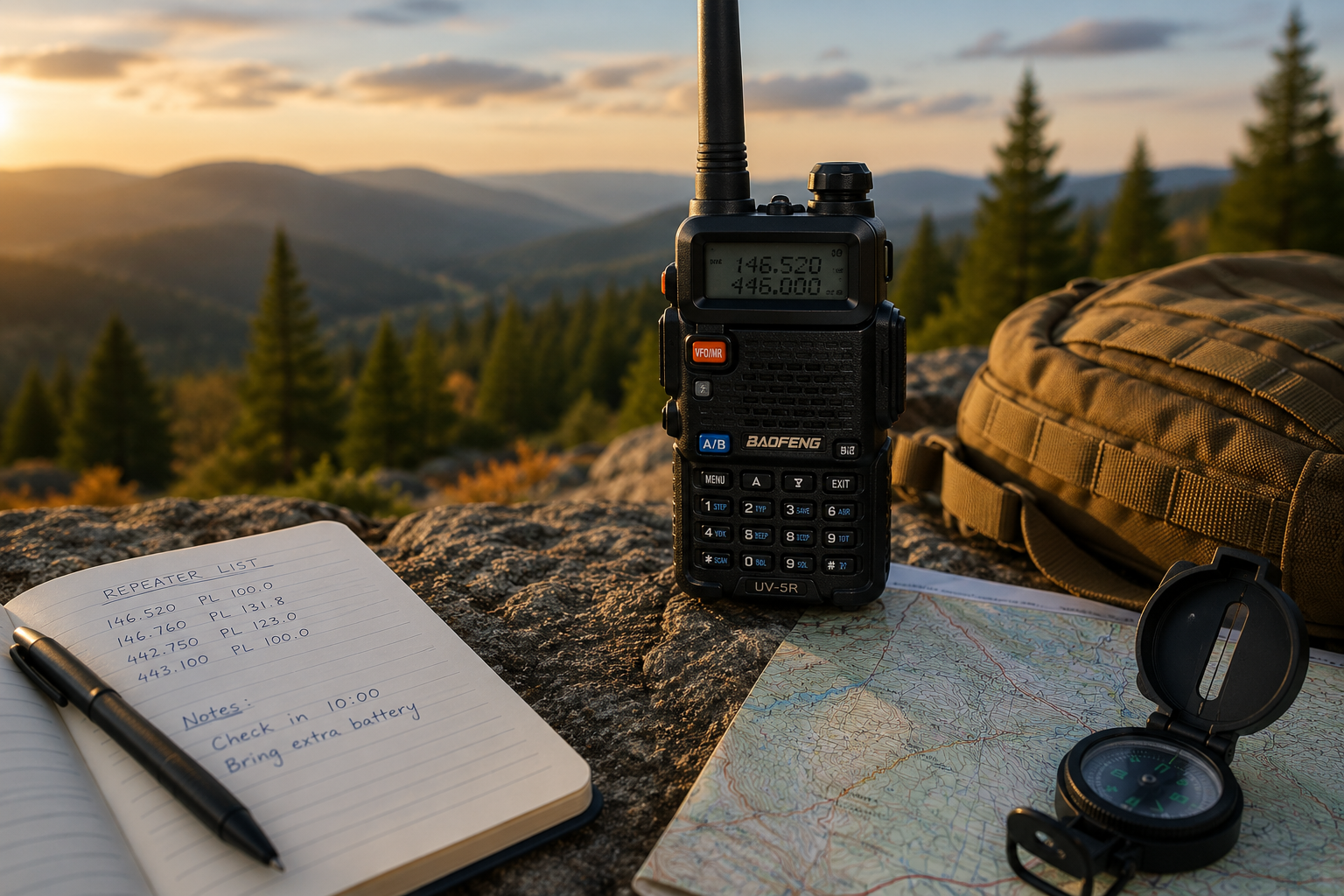
Eventually, I purchased a Baofeng UV-5R. At the time, the decision was straightforward. The radio was affordable, it could access local repeaters, and it provided a way to begin learning without making a major financial commitment. If amateur radio turned out not to be something I enjoyed, my investment would be minimal. If it did become a lasting interest, I would at least have a useful tool for hiking, emergency preparedness, and experimentation.
Looking back, I think that decision made sense. Not because the UV-5R was the best radio available. And, not because it was the most durable or advanced. But it made sense because it lowered the barrier to entry, and allowed me to begin.
The purpose of a beginner radio is not necessarily to become your forever radio. The purpose is to provide an accessible platform for learning, and many operators follow a similar path. They begin with something inexpensive, learn the fundamentals, discover what interests them, identify limitations in their equipment, and eventually upgrade based on experience rather than marketing.
The inexpensive radio serves as a bridge, not the destination. That is one reason budget radios continue to occupy an important place within the radio community. They provide opportunities for people who might otherwise never take the first step.
What Experience Teaches That Reviews Cannot
One of the interesting things about radio is how quickly your priorities begin to change once you start using your equipment.
When you're new, the questions tend to focus on purchase decisions.
- "Which radio is best?"
- "Which brand should I trust?"
- "Which model should I buy?"
After spending time on the air, however, different questions begin to emerge.
- "How reliable is this radio?"
- "How easy is it to program?"
- "How long does the battery last?"
- "Can I charge it in the field?"
- "Does it perform well in the environments where I actually operate?"
- "How durable is it?"
- "How well does it integrate into the communications system I'm trying to build?"
Those questions only become meaningful through experience. Reviews can be helpful, online discussions can provide useful information, and product comparisons have value. But none of them can fully account for your circumstances, your goals, your environment, or your operating style.
Over time, you begin evaluating equipment differently.
You stop asking: "What radio should I buy?"
And start asking: "What am I trying to accomplish?"
That shift is important because it moves the focus away from products and toward purpose. For example, a radio designed for hiking may not be ideal for vehicle operations. A radio that works well on local repeaters may not fit into a larger emergency communications plan. Or, a rugged commercial-grade handheld may be unnecessary for someone who only operates occasionally. Experience teaches you how to match equipment to mission, and no review can fully replace that process.
A Lesson Learned From Tools and Construction
Long before I became involved in amateur radio, I worked in construction. Like many trades, construction teaches practical lessons about tools. And, one of those lessons is simple, sometimes you buy what you can afford.
There were periods when premium equipment simply wasn't an option. When that happened, I looked for alternatives. Sometimes that meant buying used tools; sometimes it meant visiting Harbor Freight, and other times it meant finding something at a garage sale or on Craigslist.
Were those tools always the best available? No. Were they always the most durable? No. But they allowed work to continue, and they provided capability within the limits of the budget available at the time. The same principle applies to radio. Not everyone begins with a premium handheld from Yaesu, Kenwood, or Icom. Not everyone can justify spending hundreds of dollars before they know whether the hobby will become a lasting interest. And that is perfectly reasonable.
A modest tool that gets used is far more valuable than an expensive tool that remains untouched, because competence develops through use. Through mistakes, experimentation, and through repetition. The radio that teaches someone how to access a repeater, program memory channels, participate in a net, or troubleshoot a problem has already accomplished something important. It has helped build skill, and skill tends to outlast equipment.
The Problem With Gear Snobbery
Every hobby has its status symbols, and radio is no exception. If you spend enough time in any technical community, you will eventually encounter strong opinions about brands, equipment choices, and purchasing decisions.
And some of those opinions are valid because certain radios are objectively better built. Some manufacturers have stronger quality control, and some equipment performs better under difficult conditions. Acknowledging those realities is not controversial, but the problem arises when technical criticism turns into cultural gatekeeping.
New operators are sometimes told that their equipment is inadequate before they have even had an opportunity to learn. They are judged by what they own rather than by what they know, and that approach rarely helps anyone. A beginner who purchases affordable equipment and actively learns is often on a far better path than someone who owns expensive equipment, but never develops meaningful operating experience. Good communities understand this, and strong operators understand this.
The goal should be helping people improve, learn, and build competence. Because there is a difference between mentoring and shaming. One strengthens a community, and the other weakens it. The future of amateur radio depends less on what equipment newcomers buy, and more on whether they feel welcomed enough to continue learning.
Match the Tool to the Mission
One of the most valuable lessons radio teaches is that there is rarely a universal solution, because different goals require different tools. For example, someone who wants simple communications while hiking may find that FRS radios meet their needs perfectly. A family interested in neighborhood communications may benefit from GMRS. Someone seeking access to local repeaters may choose amateur radio. And, someone building a layered emergency communications plan may ultimately incorporate multiple systems.
The right answer depends on the mission, and this is why equipment recommendations should always begin with questions.
- "What are you trying to accomplish?"
- "Who are you trying to communicate with?"
- "What environment will you operate in?"
- "How often will you use the equipment?"
- "What is your budget?"
- "What level of complexity are you comfortable with?"
Without understanding those factors, equipment recommendations become little more than personal preference. Once you understand the mission, however, equipment choices become much easier because the radio stops being the focus, the communications plan becomes the focus. And I think that is where meaningful capability begins.
Start Where You Are
When newcomers ask what radio they should buy, they are often searching for certainty, and they want reassurance that they are making the right decision. The truth is that there is no perfect first radio; there are only reasonable starting points.
The radio you begin with today will likely not be the radio you use five years from now. Your interests will evolve, your skills will improve, and your understanding of communications systems will deepen.
That is normal.
Every experienced operator started somewhere. Most made mistakes, many of them purchased equipment they later outgrew, and learned lessons they could not have learned any other way. The important thing is not finding the perfect starting point, the important thing is starting.
Begin with equipment you can reasonably afford; learn how it works, practice with it, build experience, pay attention to its strengths and limitations, and allow experience, not advertising, to guide future purchases. Because communication capability is built gradually, and over time your knowledge will compound, skills will improve, and your confidence will grow.
Your first radio does not need to be your last, it only needs to be the one that begins the journey. And in the long run, that journey will be defined far more by what you learn than by what you buy.
—PCG